
ISO controls how bright your photo appears by changing how strongly the camera processes the light it has captured. In simple terms, a low ISO uses less amplification, and a high ISO uses more. Common ISO values are typically 100, 200, 400, 800, 1600, and higher.
- Low ISO (for example ISO 100 or 200) usually gives the cleanest image quality and is best when there is plenty of light.
- High ISO (for example ISO 1600, or above) makes it easier to shoot in darker conditions, but it can introduce visible noise (a grainy or speckled look).
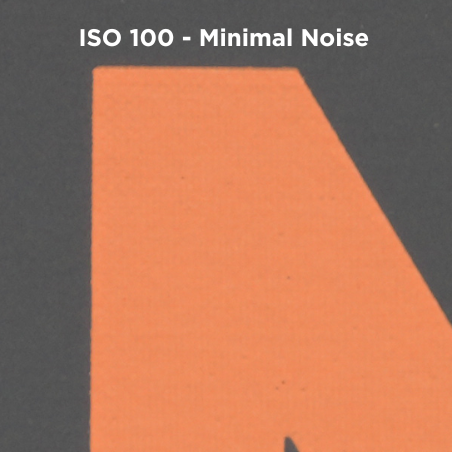
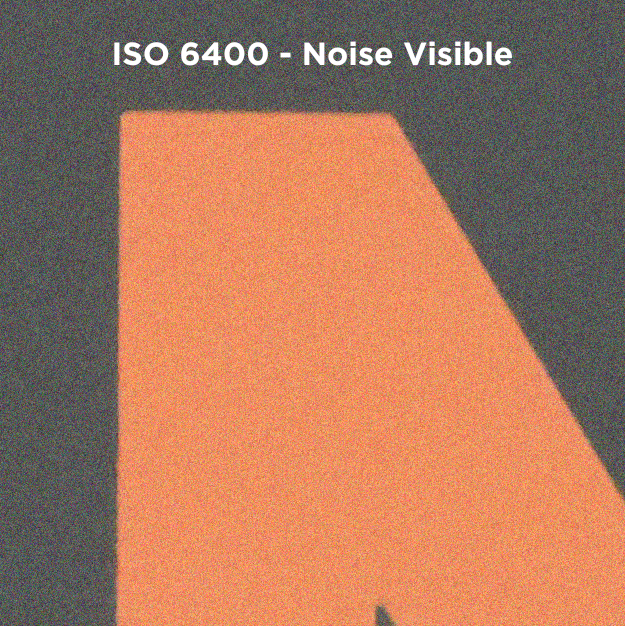
That trade-off is the key idea with ISO: raising it can save a shot when light is low, but the image may look ‘noisy’ and lose some detail. Modern cameras handle high ISO better than older ones, but in general it is still a good habit to keep ISO as low as you reasonably can. The images below demonstrate how increasing the ISO introduces noise to the image and detail in the textured area
Modern cameras offer ‘auto ISO’ which selects the ideal setting for an image. They also allow you to set a maximum setting to prevent the camera choosing a particularly high setting in especially challenging condition. Software such as Photoshop is exceptionally good at removing noise from an image but the trade-off is that the image can lose fine detail particularly in high contrast areas.
Here are some common real-world situations:
- Bright sunshine: Start with a low ISO such as 100 for the cleanest possible image.
- Cloudy weather or indoors near a window: You may need ISO 400 to 800 to keep the photo bright enough.
- Low light, evening, or fast action indoors: A higher ISO such as 1600 or above can help you use a faster shutter speed and avoid blur.
Quick tip: ISO is one part of the exposure triangle, alongside aperture and shutter speed. If you raise ISO, your image gets brighter, which can let you use a faster shutter speed or a narrower aperture. If you lower ISO, you may need more light by using a wider aperture or slower shutter speed to keep the same exposure.
Recap: ISO helps you manage brightness in different lighting conditions, but higher ISO usually means more visible noise. Use the lowest ISO that still lets you get the shot you want.
“ISO brightens the moment, but every stop comes with a trade-off.”